Scouting is not only about finding weaknesses. For me, good scouting is about understanding rhythm, habits and decision-making—and using that understanding to prepare a team.
Coaching perspectives from the USA and Europe offer useful examples of how to connect video, statistics and clear instructions.
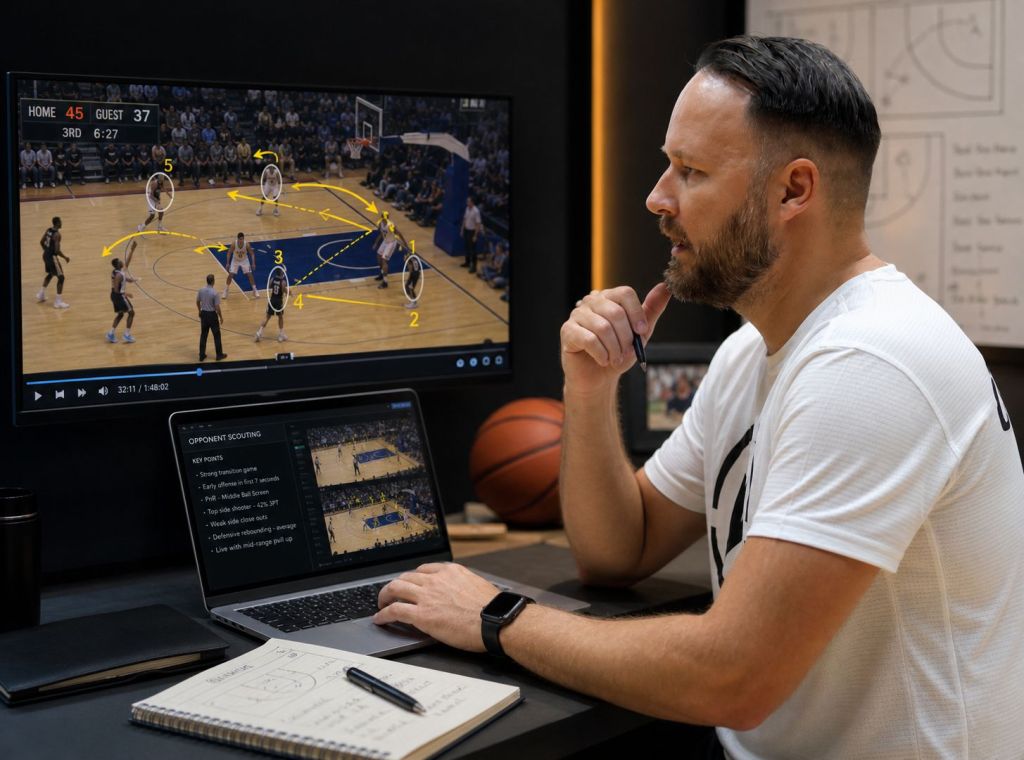
USA: Detailed Preparation, Focused Delivery
In a September 2026 Hudl interview, American University coaches Isaiah Tate and Sammy Schulman described a shared scouting process. Staff divide responsibilities across offense, defense and special situations, connecting statistical insights with relevant video.
Their preparation includes studying four or five opponent games, while individual player assignments can contain just five or six annotated clips. The staff examines the detail, then selects what players need to see. This is one NCAA example, rather than a universal American model.
Europe: Preparing for the Next Decision
In his 2020 Basketball Immersion interview, Sergio Scariolo discussed the variations within EuroLeague offenses and the importance of preparing alternatives when the original game plan fails.
His message about scouting was clear: assistants should identify priorities, anticipate difficulties and provide practical options. That remains a useful coaching principle when studying how an opponent responds after its first action is stopped.
My takeaway is that these approaches share a common goal: turning detailed analysis into decisions players can execute.
What I Look for When Scouting an Opponent
When I prepare for an opponent, I always ask:
- What actions create their best shots?
- Which players make the right decisions under pressure?
- Where do they become uncomfortable defensively?
- How do they react after the first option is taken away?
- Can we control the tempo and force them into our game?
These questions help connect individual tendencies with team behavior. Recognizing a play matters, but understanding its timing, preferred options and counters makes the information actionable.
Statistics Must Support the Game Plan
NBA three-point averages through April 1, 2025: 37.4% catch-and-shoot; 32.9% pull-up.
That comparison raises a useful scouting question: what type of shot are we allowing a particular player to take?
The answer requires individual shooting volume, shot location, defensive pressure and video context. A league average alone cannot decide our pick-and-roll coverage.
I want the numbers to sharpen the questions we ask when watching film—and the film to explain the patterns behind the numbers.
Players Need Clarity
The best scouting report should not overload players with information. It should give them clear, simple advantages they can use immediately on the court.
Basketball is full of details, but players need clarity.
As coaches, our job is to turn information into confidence, preparation and better decisions.
For clubs and coaching staffs looking for support, explore my remote basketball scouting service.

