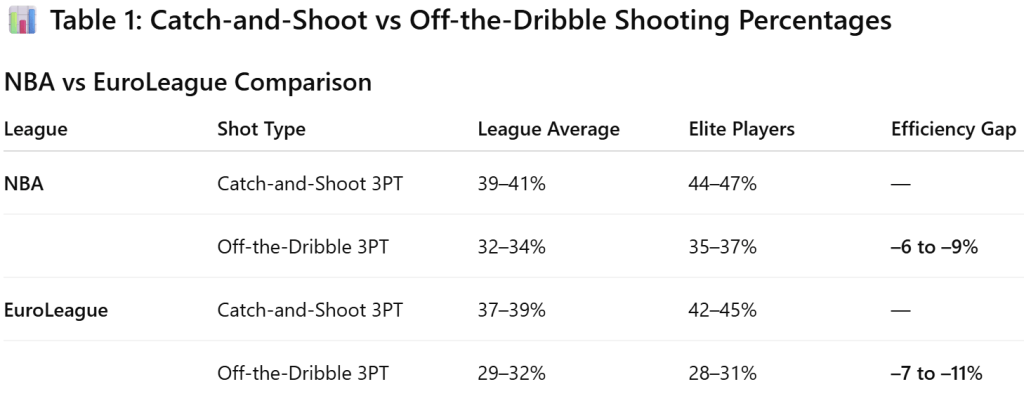
At every serious level of basketball — NBA, EuroLeague, high-level domestic leagues — one trend is consistent:
Players shoot significantly better on catch-and-shoot attempts than on shots after the dribble.
Let’s break down the numbers, then explain the real basketball reasons behind them.
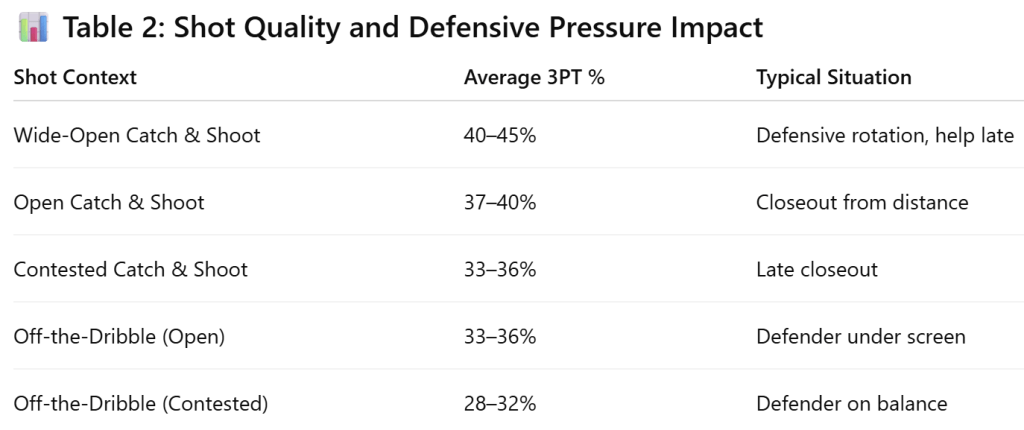
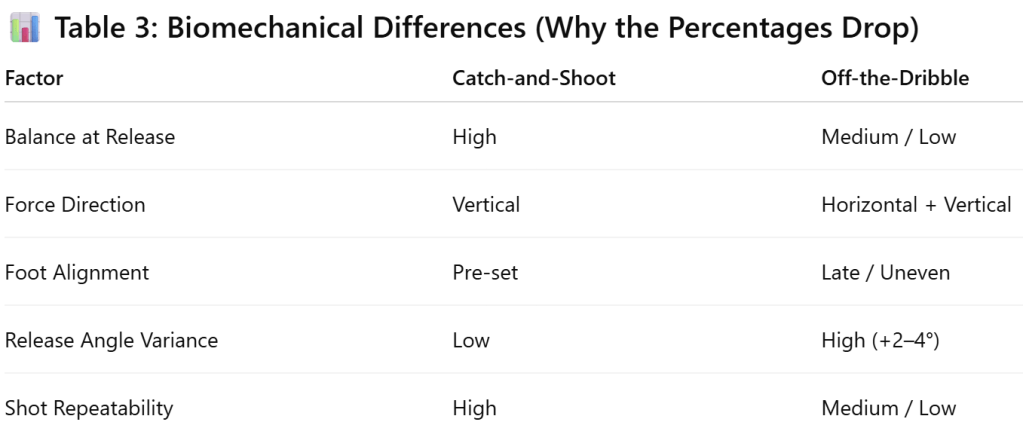
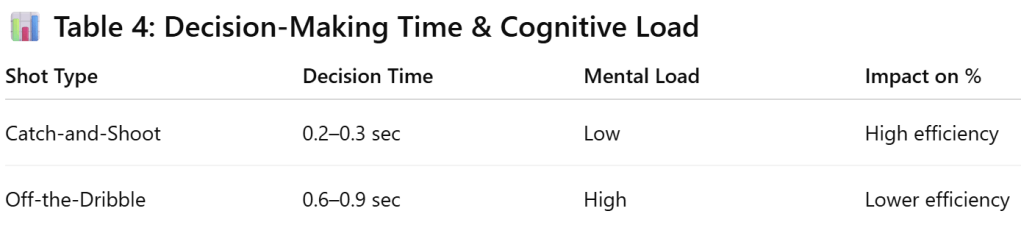
This question appears at every level of the game — youth, professional, NBA, and EuroLeague. The short answer: off-the-dribble shots are biomechanically, cognitively, and defensively harder.
Data based on aggregated NBA (2018–19 to 2023–24) and EuroLeague (2017–18 to 2023–24) league-wide shooting trends using player-tracking, play-by-play analysis, and role-based shot classification.
To sum up
Shooting percentages drop after the dribble because off-the-dribble shots are objectively harder, not because players are worse shooters. NBA and EuroLeague data consistently show a 6–11% efficiency gap between catch-and-shoot and off-the-dribble attempts. This gap is driven by increased decision-making time, disrupted biomechanics, and higher defensive pressure. Catch-and-shoot shots benefit from pre-set feet, vertical force, and minimal cognitive load. Off-the-dribble shots introduce horizontal movement, balance recovery, and release-angle variability. Usage rate and fatigue further reduce efficiency for high-volume creators. These factors are measurable and repeatable across all elite leagues. The goal for players is not to eliminate the gap, but to reduce mechanical variability. The goal for teams is to maximize advantage creation and shot quality. This is why elite offenses are built to create catch-and-shoot opportunities and use off-the-dribble shots only when necessary.
 JSProBasket